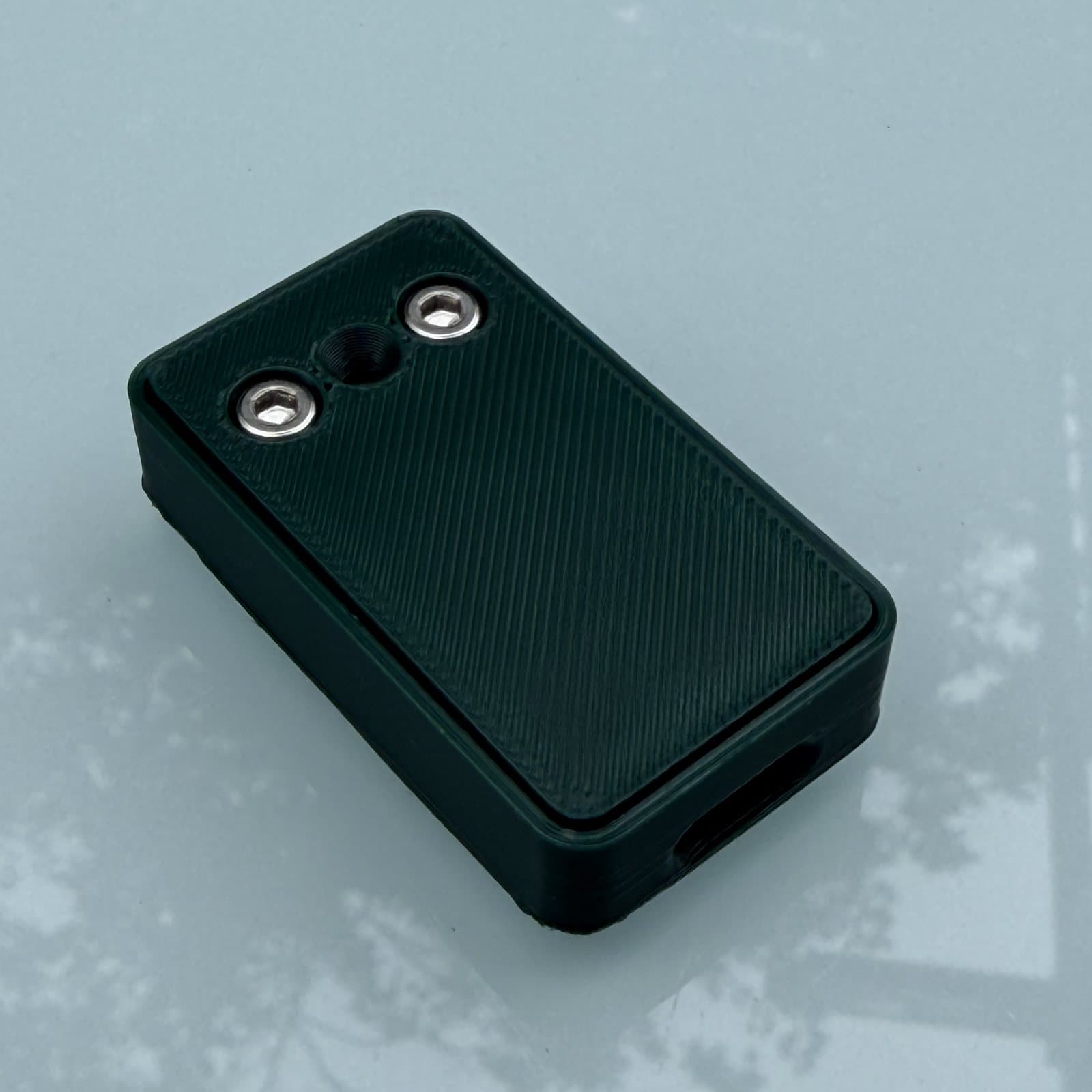
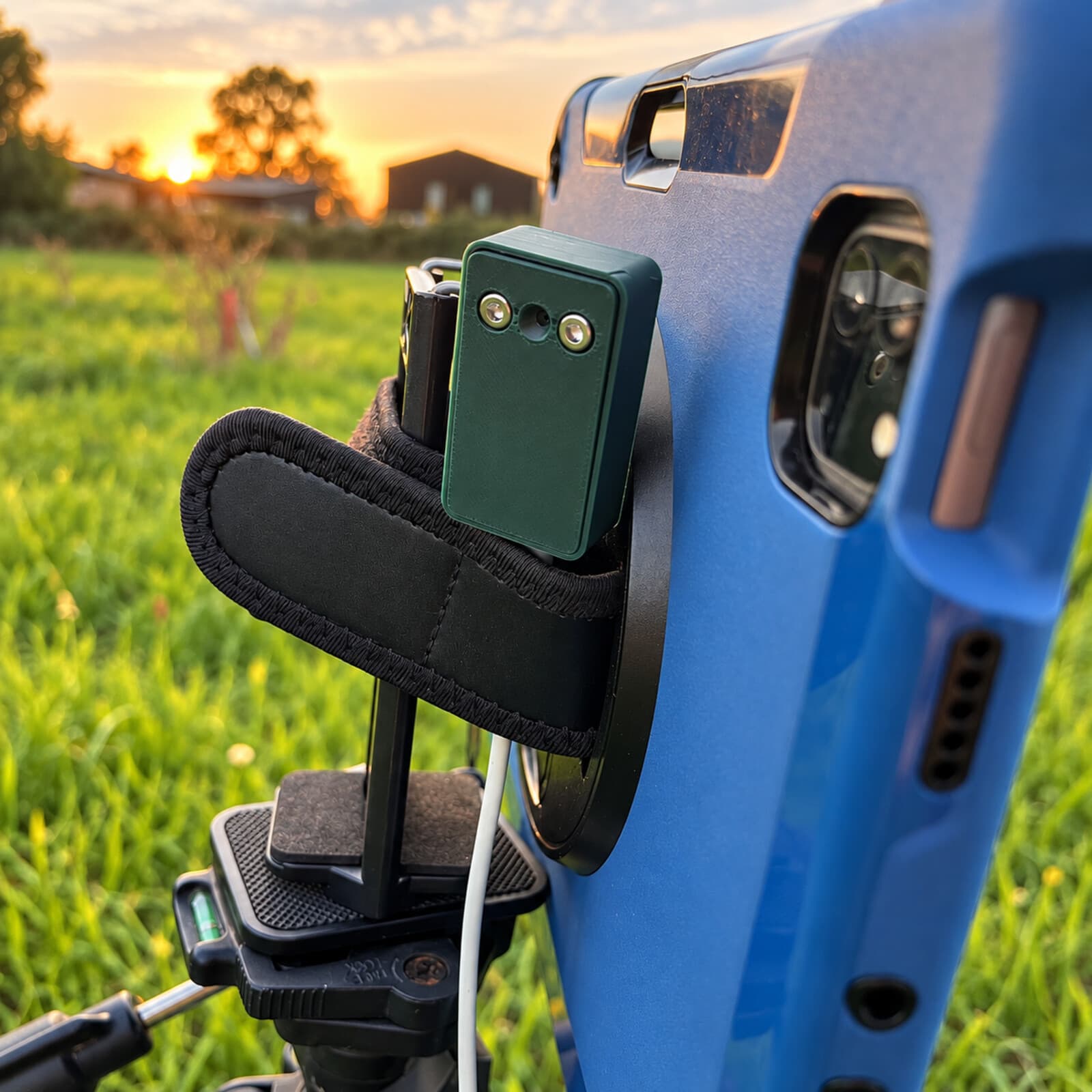
The bat dongle: the microphone opening is at the top, USB-C at the far end
Photograph 1 of 5: The bat dongle: the microphone opening is at the top, USB-C at the far end
alauda
The bat dongle
USB Audio Class 1 ultrasonic microphone · 384 kHz · records to 128 kHz · USB-C · no drivers
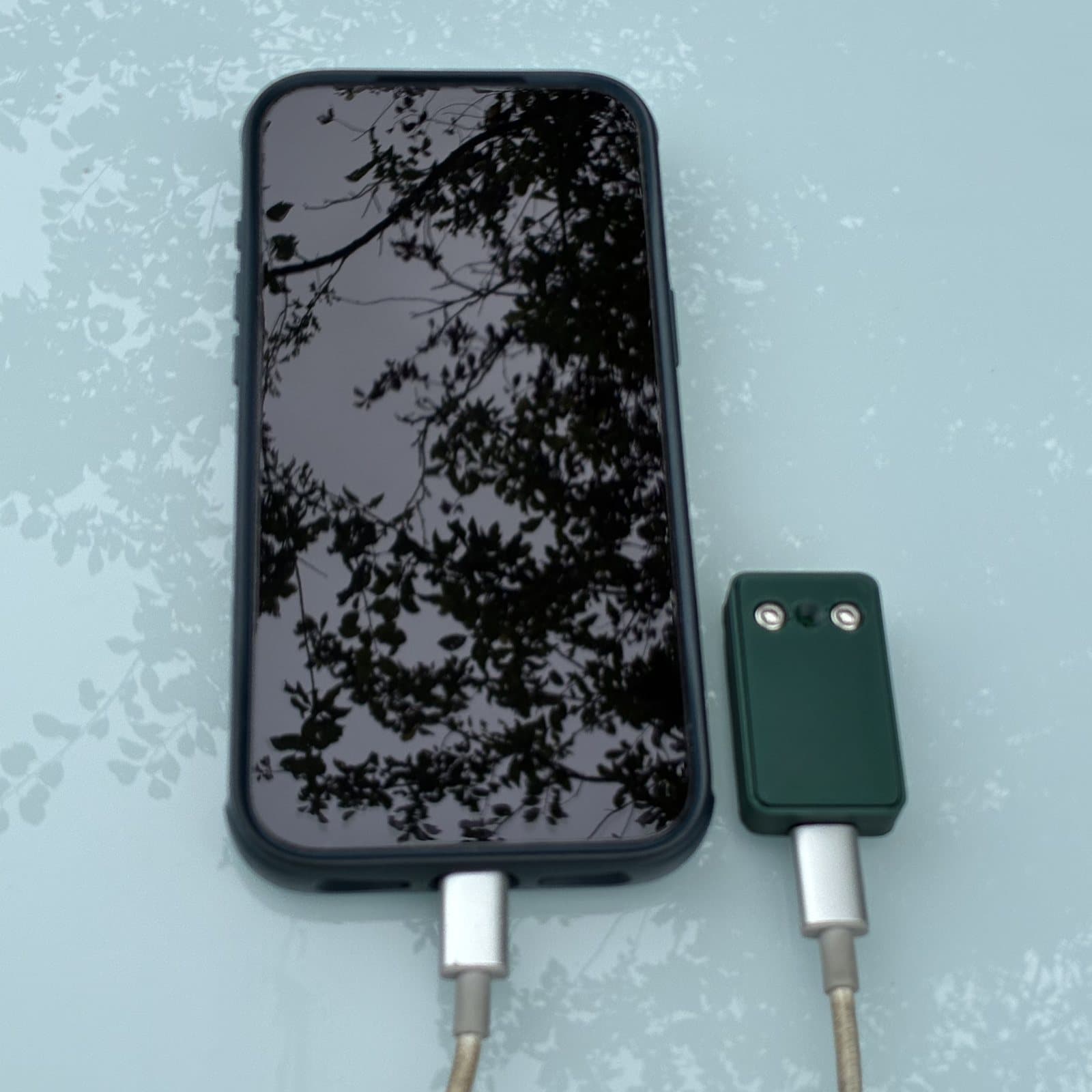
Plug it into a laptop, tablet or phone and it appears as a 384 kHz microphone. Open Audacity, Kaleidoscope, Raven or BatSound, pick it as the input, and record. There is nothing to install and nothing to configure: it is a standard USB audio device, so anything that can record from a USB microphone can record from this one.
+ £3.95 tracked shipping to a UK address. Dispatched within 7 working days of your order; the total, including VAT and shipping, is shown before you pay.
25 available
Card, Apple Pay or Google Pay through Stripe. Businesses can enter a VAT number at checkout and receive a VAT invoice. UK delivery only.
- Dispatched within 7 working daysRoyal Mail Tracked 48, UK only; 7-10 working days from order to your door
- 14-day returnsNo reason needed
- 12-month warrantyRepaired or replaced
Works with
Survey sessions on your phone
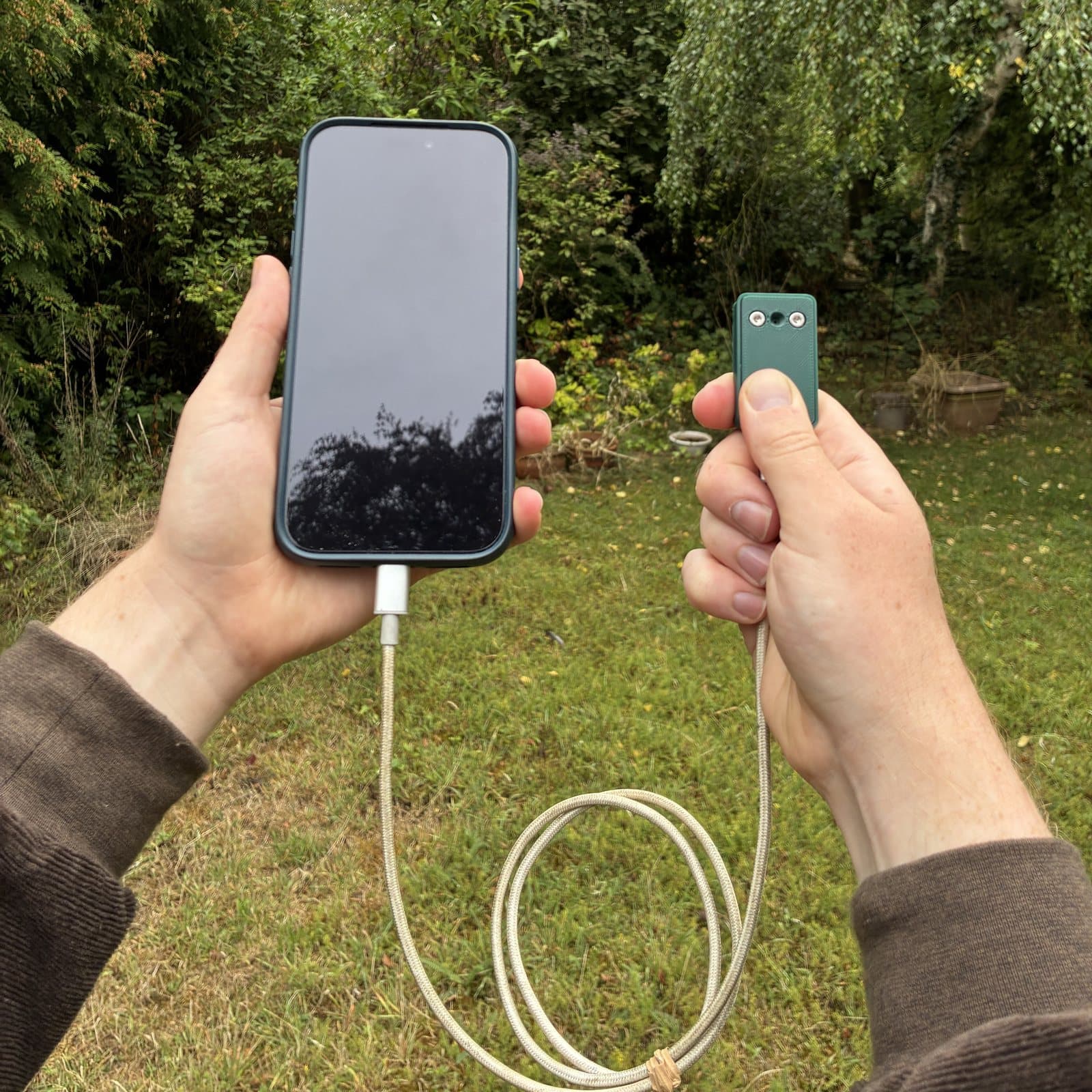
Plug the dongle into your phone and open one of these apps. All five have been tested with it; OpenBat also names the species for you.
 OpenBatiPhoneAutomatic bat species ID includedLive spectrogram, heterodyne listening, on-device auto ID and session logging with a map. Free and open source.Before your first session, calibrate the microphone in the app's settings so the spectrogram looks its best with this dongle.
 Bat DetectoriPhoneHeterodyne and 16x time-expansion listening, 384 kHz full-spectrum recordings triggered by bat calls, and a demo mode for bat walks. Free.
 ecoBatReciPhoneLive sonogram and ultrasound listening for free; a subscription adds saved recordings and auto ID of mid-European species.
 BatGizmoAndroidLive spectrogram, heterodyne listening, WAV recordings with GUANO metadata. Free and open source.
 Bat RecorderAndroidLive spectrogram, heterodyne and time-expansion listening, call-triggered WAV recording. Open source.Not on Google Play: download the APK from digitalbiology.com, then request the free licence from the record button to enable saving files.
It is a standard USB microphone, so other open-source bat apps that record from a USB microphone at 384 kHz are likely to work too.
Got a dongle from before September 2026? Bat Recorder needs firmware 0.8.0 or later. Update it from your browser in under a minute; no software to install.
Analysis on a computer
The recordings are ordinary WAV files, so they open anywhere: Audacity, Wildlife Acoustics Kaleidoscope, Raven Pro and Raven Lite, BatSound or any other analysis software. For recording directly on a laptop, set the sample rate to 384 kHz in any USB audio host; calls are captured to 128 kHz.
Specifications
- Microphone
- Knowles SPH0641LU4H ultrasonic MEMS, bottom-port
- Sample rate
- 384 kHz, mono, fixed; chosen for compatibility with phone and desktop recorders
- Bandwidth
- Records to 128 kHz; the stream is band-limited there so nothing above it folds into the calls
- Interface
- USB Audio Class 1 over USB-C; no driver on macOS, Windows 10+ or Linux
- Processor
- Raspberry Pi RP2354A
- Power
- From the USB port; no battery
- Case
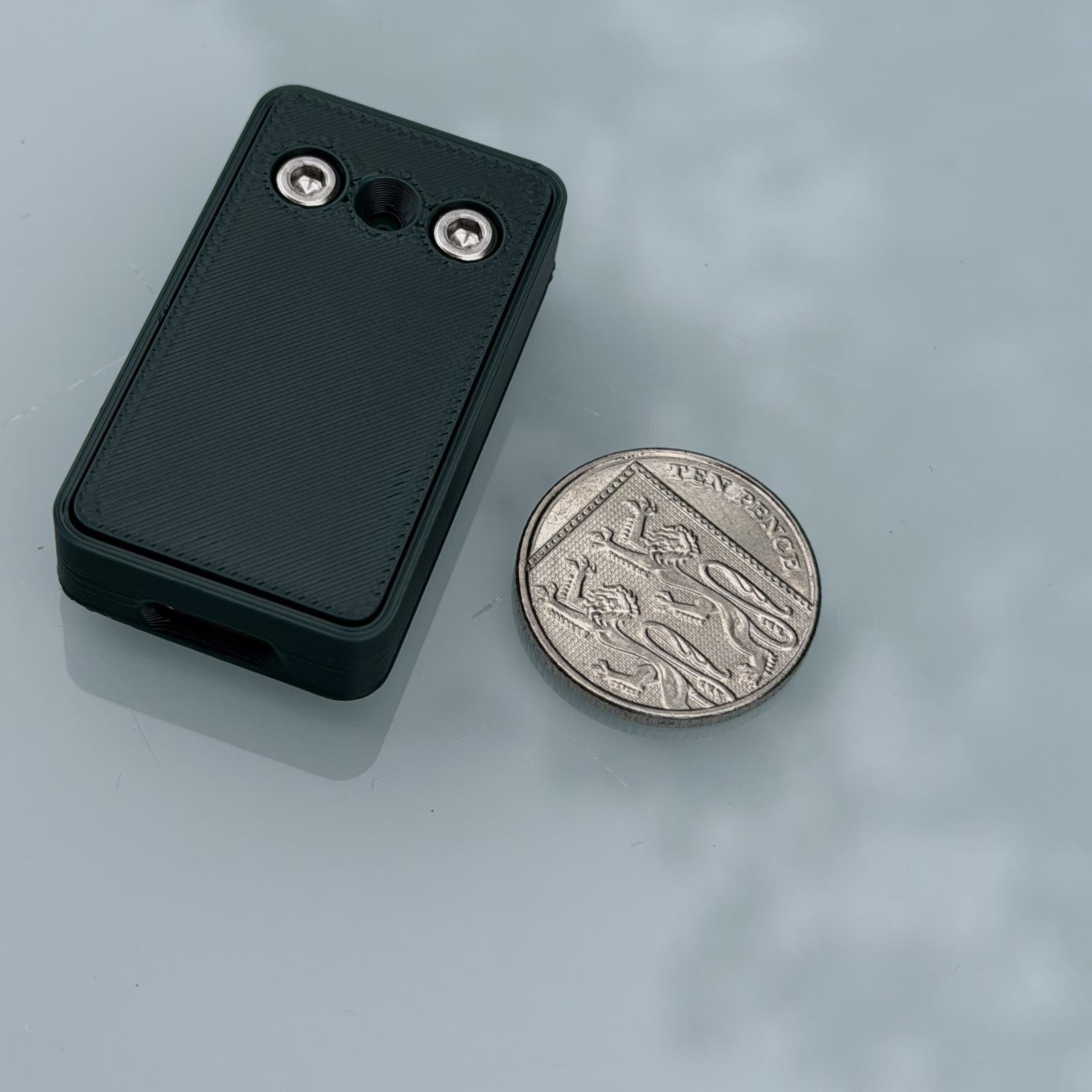
- 3D-printed shell with a moulded acoustic horn, about the size of a thumb
In the box
- The bat dongle
- A short USB-C to USB-C cable
- A cloth bag
- A card with the legal information, returns and warranty terms
Returns and warranty
You can cancel for any reason within 14 days of receiving it and we refund within 14 days of getting it back. It is covered by a 12-month warranty against faults, on top of your rights under the Consumer Rights Act 2015. Full terms on the returns and terms pages.
Compliance
Model BAT-1 is UKCA marked. Apalos Ltd declares it conforms to the Electromagnetic Compatibility Regulations 2016 and the RoHS Regulations 2012. Read the Declaration of Conformity (PDF). Manufacturer: Apalos Ltd, 86-90 Paul Street, London EC2A 4NE, United Kingdom.
recorded on a bat walk, 8 september 2026
What it actually records.
One evening in west London, handheld, plugged into a phone. Nothing here is a demonstration file: these are excerpts from four recordings made that night, and the spectrograms are drawn in your browser from the audio you can play.
Bats call far above human hearing, so each one-second clip is slowed to a tenth of its real speed. A pulse that lasted two milliseconds at 59 kHz becomes twenty milliseconds at 5.9 kHz, and you hear it roughly as a bat detector would present it.
- 160 s
- recorded
- 621
- calls detected
- 2
- species
- 128 kHz
- bandwidth
Common pipistrelle
Pipistrellus pipistrellus
drawing sonogram…Play the recording
loading field recording
A search-phase train from the lower of the two species present that night. Each pulse sweeps down steeply and flattens into a tail in the mid-forties.
20 pulses · peak 46 kHz · 0.05% of samples clipped
Download this raw WAV (500 KB)Soprano pipistrelle
Pipistrellus pygmaeus
drawing sonogram…Play the recording
loading field recording
The same shape roughly twelve kilohertz higher, and the cleanest second in the whole session. Sibling species, told apart by where the tail settles.
23 pulses · peak 58 kHz · 0.04% of samples clipped
Download this raw WAV (500 KB)Both species at once
drawing sonogram…Play the recording
loading field recording
One second with two bats in it, calling over each other around forty-eight and fifty-nine kilohertz. A single wideband recording separates them; a detector tuned to one would have missed the other.
78 pulses · two trains, 48 and 59 kHz · 0.55% clipped
Download this raw WAV (500 KB)A social call
Pipistrellus sp.
drawing sonogram…Play the recording
loading field recording
Not echolocation at all. Several components in a few tens of milliseconds, dropping to a tail near 20 kHz, with the ordinary search train still running above it. The loudest thing recorded all night, and the most distorted.
peak 100% of full scale · 1.27% of samples clipped
Download this raw WAV (500 KB)
more than one kind of shape
The details are the point.
The playable clips are deliberately standardised so you can compare their raw files. These close views show why a spectrogram is still useful once you have brought a recording into your own workflow.
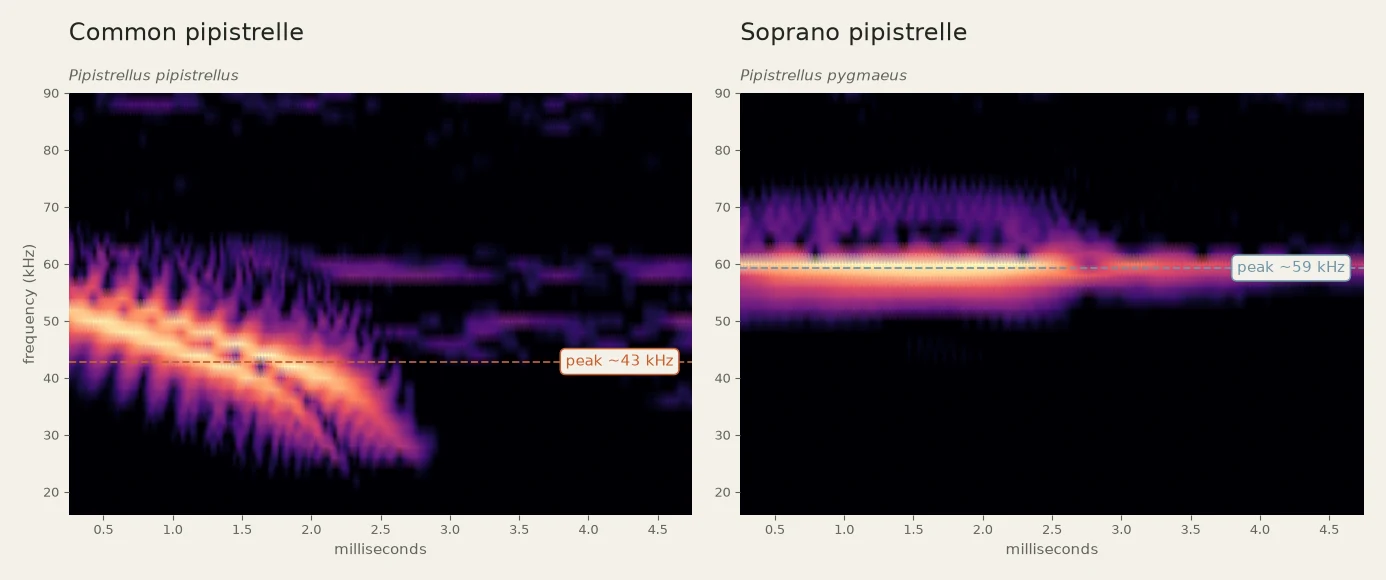
same shape, different frequency
One pulse from each species.
The least-clipped well-formed pulse of each species from that evening, on the same axes. Both show the characteristic sweep and tail; what separates them is where the tail settles.
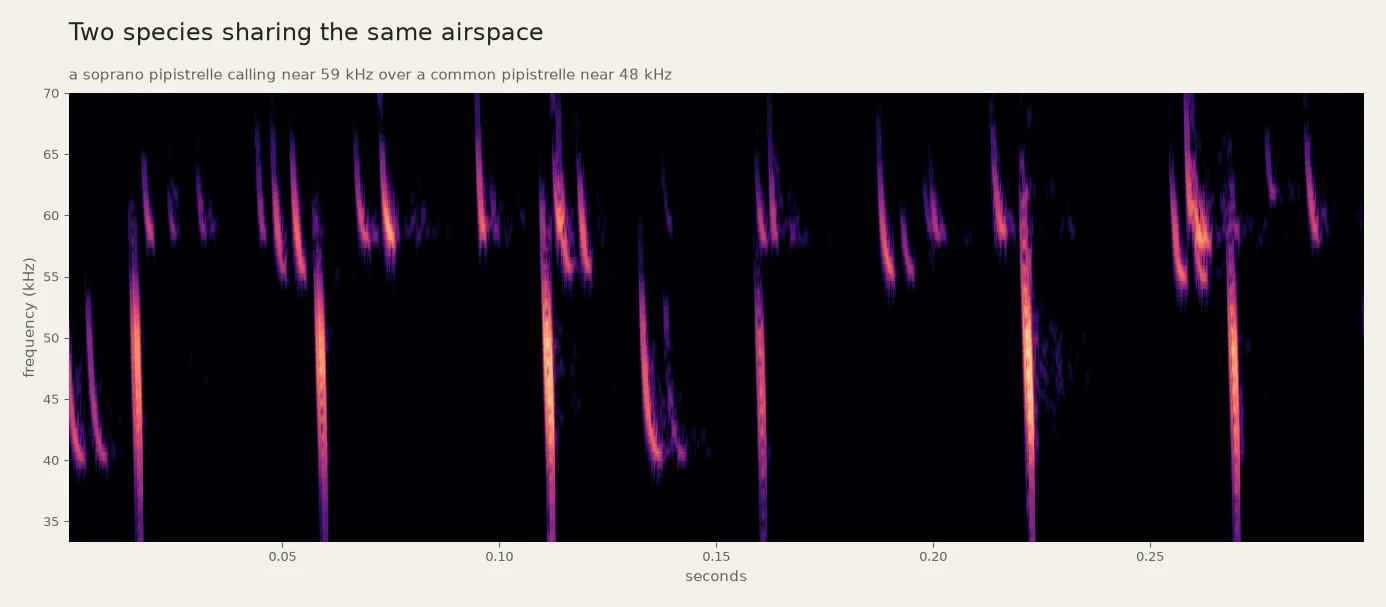
two bats, one microphone
Sharing the airspace.
Four tenths of a second from the clip above. Two call trains run through each other at different heights, and the bright full-height streaks are the loudest pulses reaching the top of the converter.
Use your own pipeline.
Every card above has its matching one-second, unprocessed mono WAV: the exact samples used to make its slowed playback and sonogram. These were recorded with an earlier firmware build at 256 kHz; shipping units present themselves at 384 kHz with the same 128 kHz bandwidth. Open one in Audacity, Kaleidoscope, Raven or BatSound and read the header. No filtering, gain or conversion is applied — it is what the device writes, ready for the software you already use.
what to expect when you open them
One honest caveat.
The gain was set too high. Every loud call that night reached the top of the converter, and in the two closest recordings the waveform sits flat against it for a fraction of each pulse. The clips above were chosen to be the least affected — between 0.04% and 0.55% of their samples — but the social call is 1.27%, and clipping adds harmonics that are not the bat. Treat these as evidence of bandwidth and sensitivity, not as reference material for measuring call parameters.
Peak frequency also varies by a few kilohertz between individuals and with habitat, which is why the two pipistrelles overlap at the edges of their ranges. The figures quote what was measured in that pulse, not a species constant.
Recorded handheld on a public bat walk. The source recordings include audible-band voices, footsteps and heterodyne spill; no attempt has been made to clean that field context from these clips before giving it to your downstream pipeline.
buying for an organisation?
We accept purchase orders.
Consultancies, councils and bat groups can buy on account. Send a purchase order for the number of units you need and we will send an invoice you can route to finance, with VAT itemised. This is an alternative to paying by card, not a threshold: buy one on the page above if that is all you need, and talk to us if you want more than the batch on the shelf.