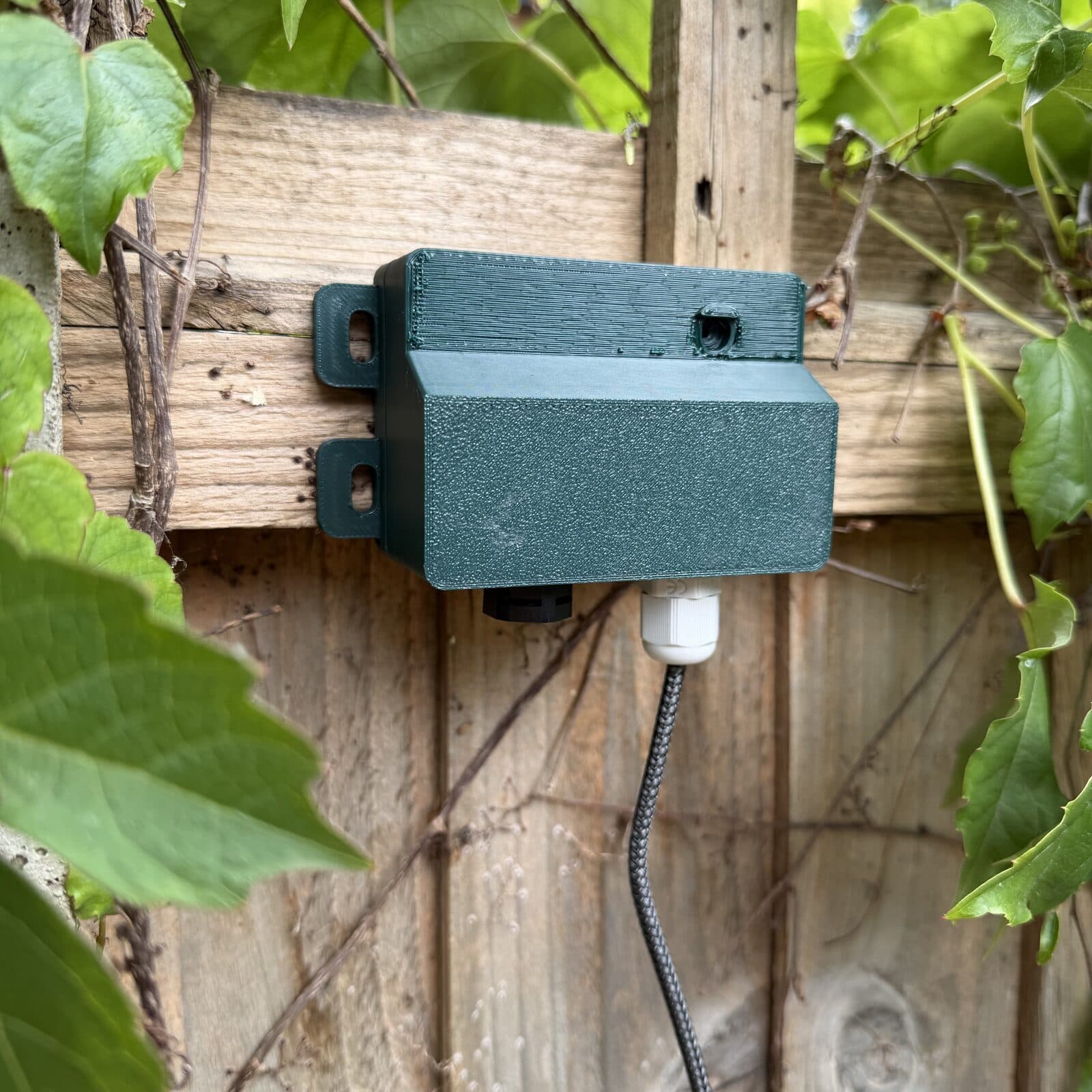
Installed on a fence rail, cable dressed downward
Photograph 1 of 4: Installed on a fence rail, cable dressed downward
alauda
The listening post
In service at three sites across West London
A weatherproof recorder that listens to one place continuously and tells you, by name, what it hears. We fit it, we keep it running, and you watch the species list build up.
Everything included. No setup fee, no hardware to buy, no per-species charge.
Not sure which you need? That’s the first thing we work out on the call.
- Replaced if it failsNo repair bills, ever
- We install itNothing for you to set up
- Annual, no lock-inStop whenever you like
What’s included
- Mains poweredA 3 m cable runs from the sealed gland to your socket. Nothing to charge, nothing to swap.
- Uploads over your Wi-FiIt joins the site network and streams detections live. No SIM, no data bill.
- Never needs visitingAs long as the power and the signal hold, it runs on its own indefinitely.
- The recorderWeatherproof, on loan for as long as you're with us. If it fails, we replace it.
- Identification, around the clockEvery call identified to species, day and night, all year.
- A live dashboardSee what's singing right now. No training needed, share it with anyone.
- Your data, exportableEvery detection downloadable as CSV, with timestamps and confidence scores.
- An annual site reportA written summary of the year: species list, timeline, what changed.
- InstallationWe come and fit it. Nothing for you to set up or configure.
Specifications
- Enclosure
- Weatherproof, gasket-sealed, UK-made
- Power
- Mains via a 3 m cable, or battery on the SIM node
- Connectivity
- Site Wi-Fi, or a mobile SIM on the SIM node
- Listening
- Continuous, 24 hours a day, all year
- Identification
- Perch 2, on UK species, with a confidence score per detection
- Fixing
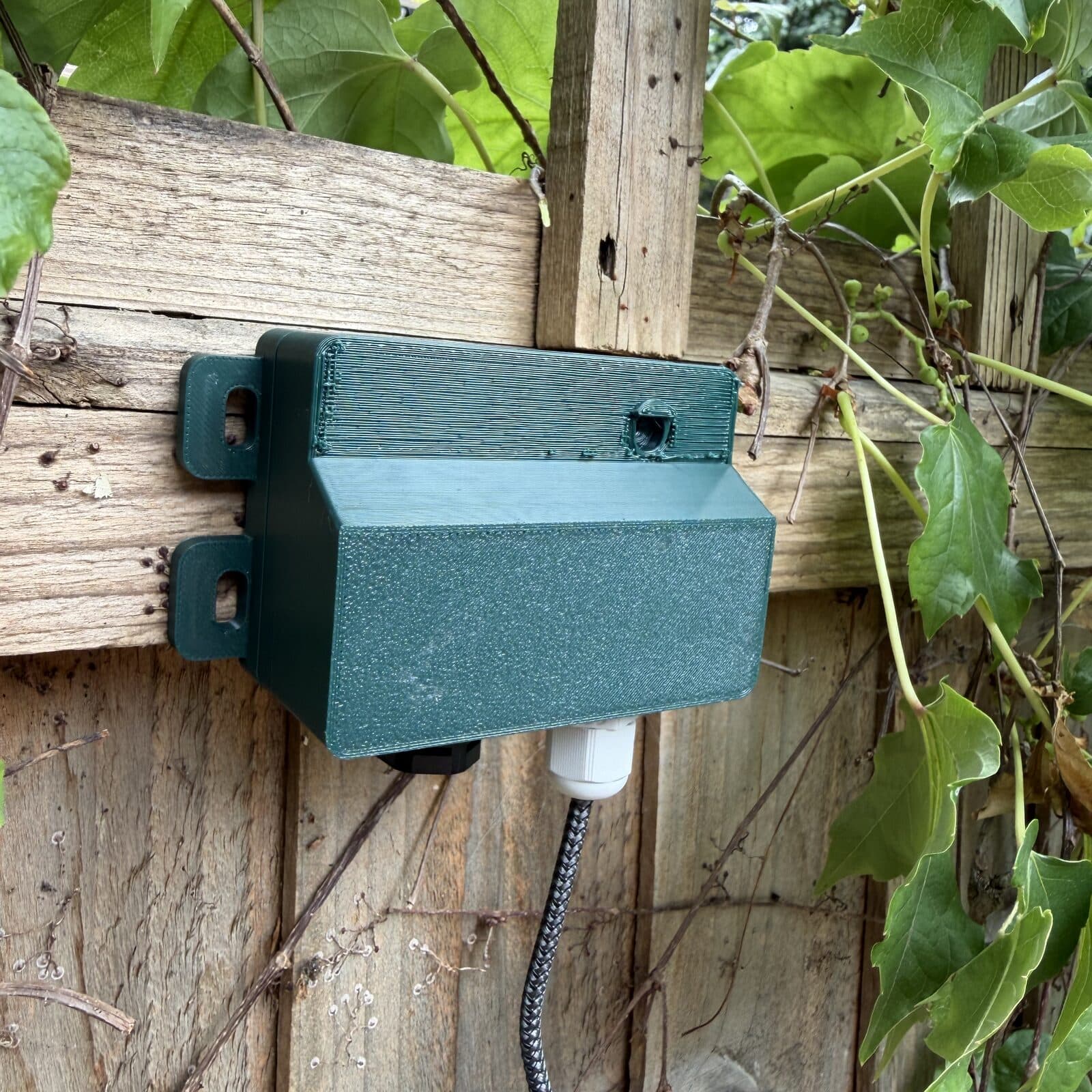
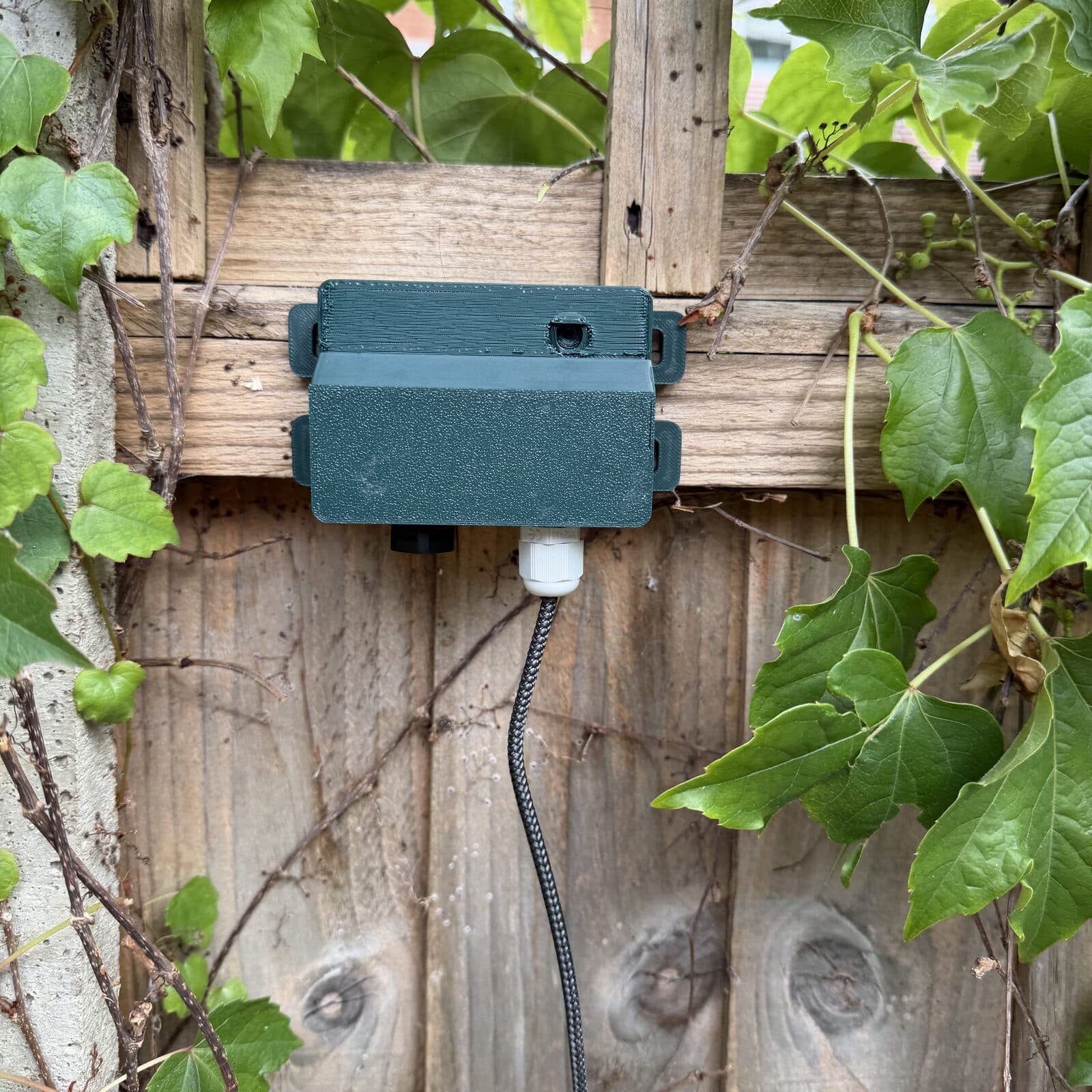
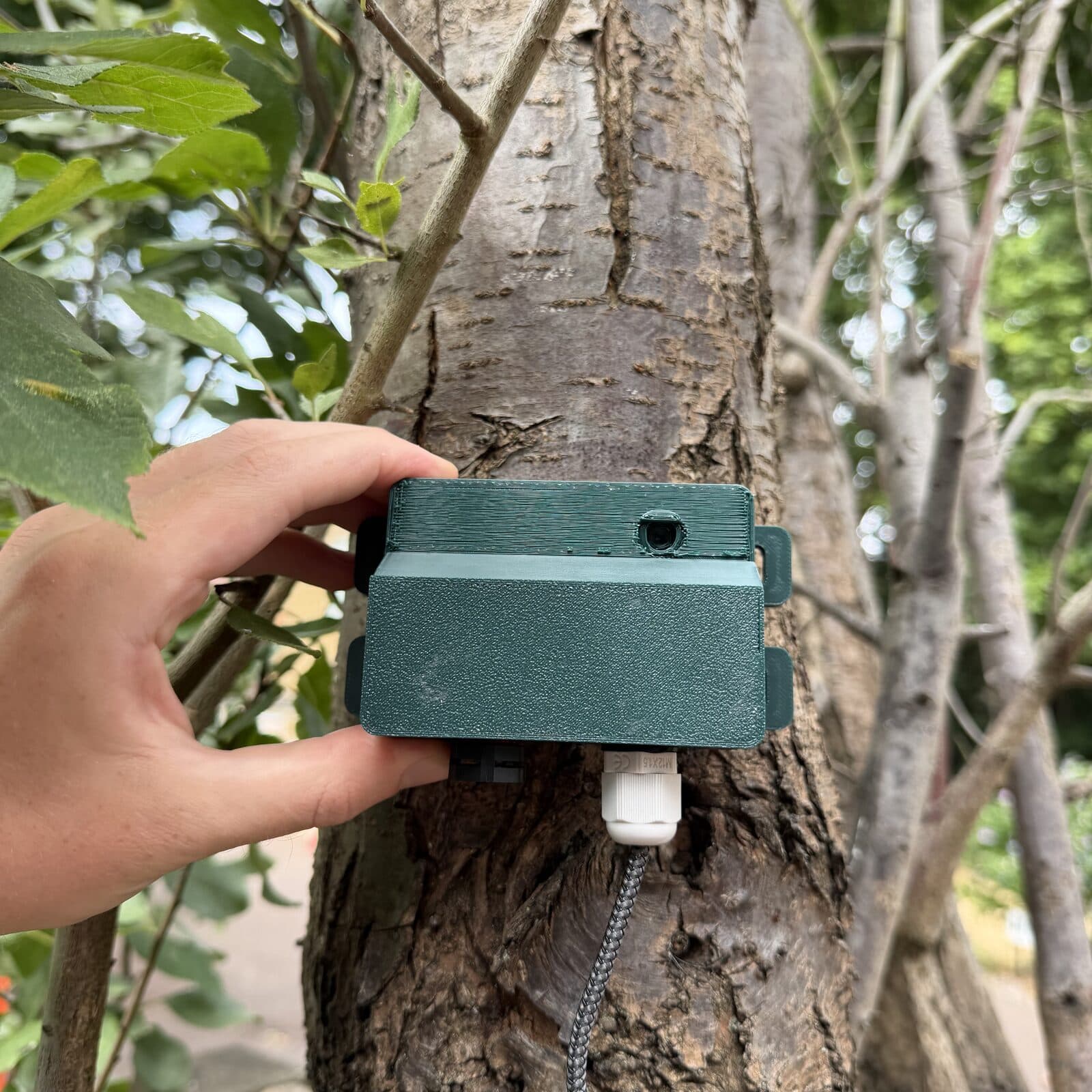
- Two brackets onto a fence rail, post or trunk; no holes in the weather face
Getting it installed
We come to the site, agree a spot with you and fix it there — usually under an hour. On a mains node we run the 3 m cable to your nearest socket and dress it; on a SIM node there is no cable at all. It starts listening the same day, and you get the dashboard link before we leave.
listening at
 Historic estate, West London
 Community conservation
 Bedfont Lakes country park
 Perivale Wood nature reserve
“It has been recording birdsong 24 hours a day and identifying species.”
what it replaces
A survey is a handful of mornings. This is every morning.
the usual way
~12 hours
Four survey visits in one spring, a few hours each, in whatever weather the calendar happened to give you. Everything outside those mornings goes unrecorded — the night migrants, the autumn passage, the bird that only sang in the week nobody came.
with alauda
8,760 hours
Every hour of every day, all year, from £400. Dawn chorus and 3am alike, in the rain, in January, whether anyone is on site or not. Then again next year, so you can see what changed.
A single day of surveyor time typically costs more than a year of listening. That is the whole pitch: this isn’t a replacement for people who know your site — it’s the 8,700 hours they can’t be standing in it.
who it’s for
Three reasons people put one up.
Estates & visitor attractions
You already tell a story about your land. This gives you a living one — what's out there tonight, not what a survey found two springs ago.
Nothing to install and nothing to run. We put it up; you watch.
Local authority parks
Continuous, timestamped, species-level evidence across your sites — for biodiversity net gain reporting, funding bids and the questions councillors ask.
Under most single-quote thresholds, so no tender. We'll send a quote you can route straight to finance.
Ecological consultancies
Year-round coverage between survey visits, on sites you can't get to at 3am. Every detection carries a confidence score and the audio behind it.
It doesn't replace your surveyors. It covers the 8,700 hours they aren't there.
before you ask
The questions we always get.
- What if there's no power or Wi-Fi where we want it?
- Then you want the SIM + battery node at £600. It carries its own power and its own mobile data, so it goes wherever the wildlife is rather than wherever the wiring is. The £400 node is the cheaper option when there happens to be a socket within 3 m and Wi-Fi it can reach — which, on most sites, is a small part of the map.
- What if there's no mobile signal either?
- The SIM node records to its own card and uploads the backlog whenever the signal returns. You lose the live view in the meantime, but you don't lose the data. Tell us about the site on the call and we'll say honestly whether it'll work — sometimes the answer is no.
- Who owns the recordings and the data?
- You do. Export everything, any time, as CSV plus the audio clips. If you stop working with us the data is yours to take with you — we'll send you the full archive.
- How accurate is the identification?
- It runs Perch 2, an open bird classifier from Google Research, on UK species. On standard benchmarks it performs at or near the published state of the art, and every detection carries a confidence score so you can set your own bar for what counts. We'd rather show you the evidence than quote you a single number: on the call we'll open a real site and you can listen to the clips behind the detections yourself.
- What happens if the box breaks?
- We replace it, included. It lives outdoors in British weather and we've priced that in — you should never be looking at a repair bill.
- Can we stop?
- Annual, and you can decide not to renew. No multi-year lock-in, no exit fee. We'd rather keep you because it's useful.
- What do we actually have to do?
- Pick a spot and let us fix a recorder to it. After that, nothing — it listens on its own and you look at the dashboard whenever you want to.
Twenty minutes, and we’ll be straight with you.
Tell us about the site and we’ll tell you whether this is worth your money. If it isn’t — no signal, wrong habitat, wrong question — we’ll say so on the call.